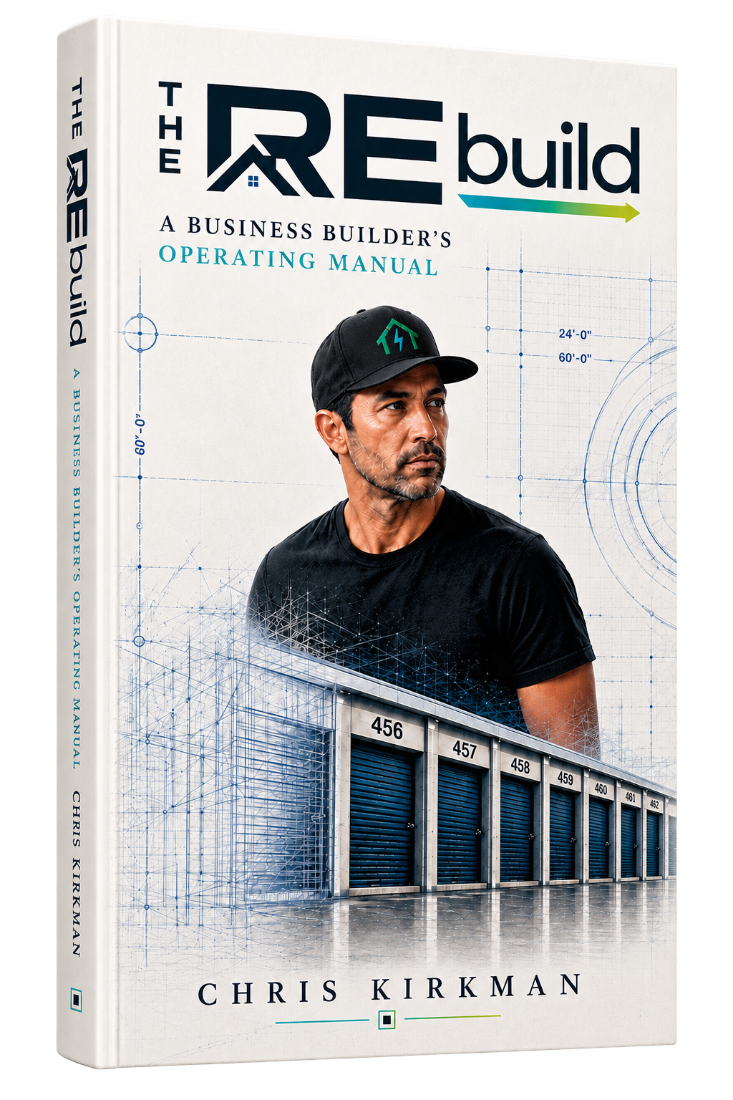
The economy we are building in
As I write this in 2026, the conditions are genuinely hard. Inflation has outrun wage growth for years: minimum wages climbed, but paychecks did not keep up with what those paychecks buy. Groceries, insurance, and rent outran wages, and home affordability fell further out of reach.
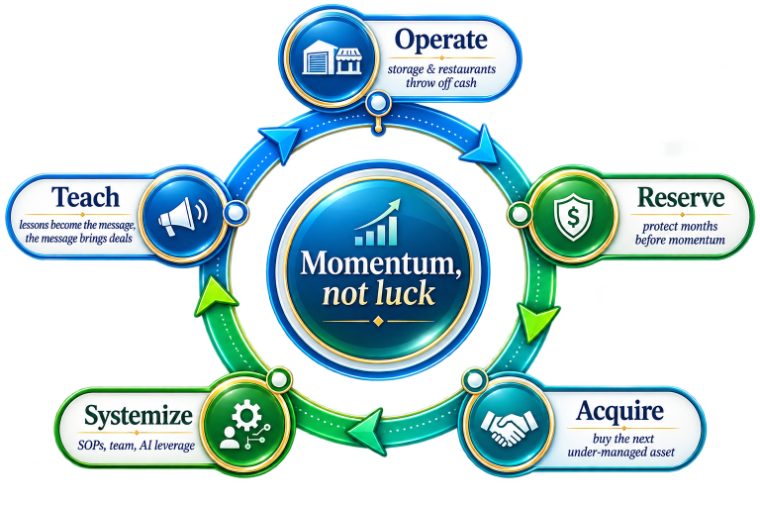
From The REbuild — see all 456 pages →
More renters, and that is not a tragedy
There will be more renters for years to come. Hear me clearly: it is fine to rent the roof over your own head while owning the roofs over other people’s. Some of the wealthiest people I know rent where they live, on purpose, for the flexibility and the lower carry. Rent is often cheaper than the equivalent mortgage payment, and a renter never writes the check for a new roof. The wealth lives in the rent roll, not the front door.
The operator’s honest read
Rents have been flat, so you cannot count on the market to raise your income for you. Rates sit high, so debt service eats more of every dollar and lenders say no more often. When income cannot rise and debt costs more, valuations compress, because value follows NOI and the DSCR math stops working at yesterday’s prices.
Two skills this season pays for
First, creative financing: seller carry, assumptions, partnerships, terms that solve the seller’s problem without pretending the math works when it does not. Second, forced appreciation: buying value you can add with your own systems instead of waiting for the market to hand it over. BRRRR remains one of the best on-ramps ever built for exactly this, because every dollar of value you force is a dollar this economy cannot take back.
Name the conditions honestly
At the time of this writing we are in the hardest stretch most people under sixty have operated through. Inflation ran hot and stayed elevated. Wages rose but not as fast as the cost of housing, food, and insurance. Interest rates went from historically cheap to genuinely expensive in eighteen months, and they have not come back. Home affordability is at multi-decade lows, and more people rent than at any point in a generation.
What that does to commercial real estate
Rents did not rise to match rates, so NOI did not grow into the higher debt cost. That means valuations fell without buildings getting worse, and properties that penciled at four percent do not pencil at seven. It means DSCR is the binding constraint on almost every deal, sellers still remember 2021 prices, and the gap between what they want and what the income supports is the whole negotiation.
Renting your home while owning the buildings other people rent is not a contradiction. It is a strategy.
On renting
I will say something that sounds strange from a real estate operator: it is fine to rent where you live. Some of the wealthiest people I know rent their homes. Rent is often lower than a mortgage payment at today’s rates, you carry none of the maintenance or tax exposure, and you keep the flexibility to move toward the next opportunity. Meanwhile you can own the apartment buildings and storage facilities where other renters live and store their lives. The asset you live in and the assets you invest in do not have to be the same thing, and in this cycle they often should not be.
Why I am still buying
Because hard markets are when the under-managed asset becomes available at a price the income supports, and because the operators who learn to make money at seven percent will be very hard to compete with when money is cheap again. Every cycle I have been through rewarded the people who kept operating through the bottom. This one will too.
What I learned making half a million a year
For years my design career paid very well, and I was comfortable. I also had a date I wanted to be done by, and I hit it, not by out-earning the salary but by building things that paid me whether or not I showed up: storage facilities, apartments, restaurants, a roofing company along the way. Every one of them required more work up front than the job did. Every one of them eventually required less. That trade is the only reason the current economy is a problem I get to solve rather than one I am subject to.
I mention the number because I want to be honest that leaving a good salary is not the point. The point is that a salary has a ceiling and a single point of failure, and a portfolio of things you own does not. In an economy where the salary buys less every year, that distinction is not philosophical.
The part that is actually good news
A hard market clears out the people who were in this for the easy money. The syndicators who bought on cap-rate compression and floating debt are selling, and the buildings they bought are coming back to market at prices the income can actually support. For an operator who kept reserves and kept learning, this is the buying window that the 2021 market never offered. I am not cheerful about high rates. I am realistic that they are producing the deals I have been waiting years to see, and that the skills to run them profitably at seven percent are the ones that will matter for the rest of my career.