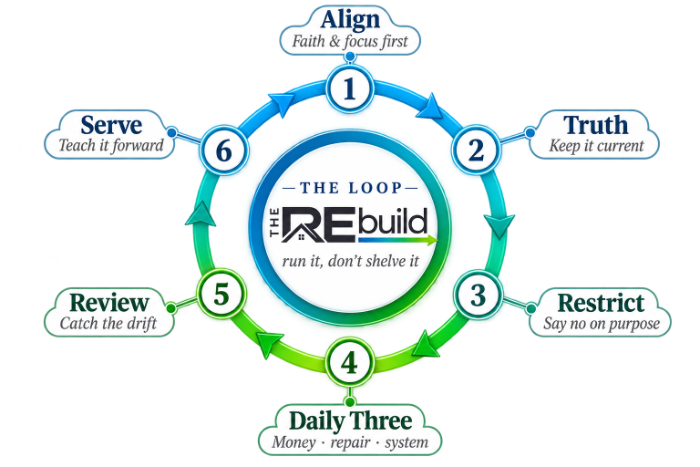
The Daily Three: the smallest system that rebuilt everything
In the worst season of my life I did not need a vision board. I needed a way to end the day knowing I had moved, even when the day went sideways. That became the Daily Three: one money move, one repair move, one system move, every day, no exceptions. Three moves, not thirty; small enough to survive a bad day, sharp enough to compound across a year.
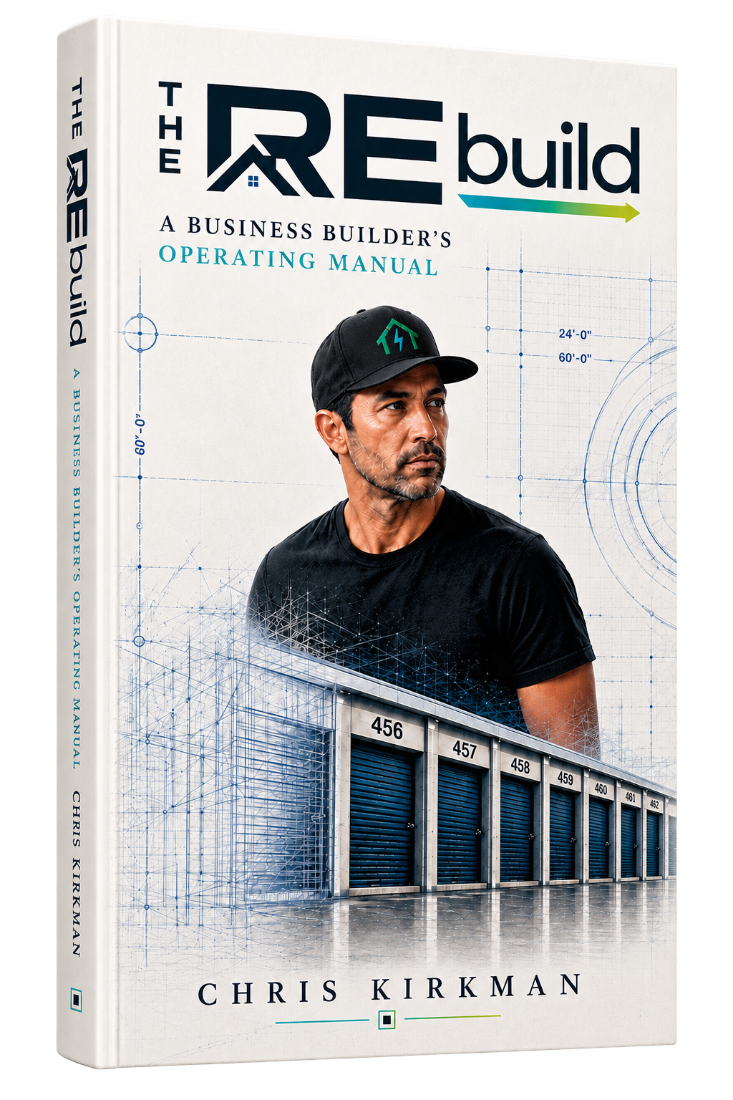
From The REbuild — see all 456 pages →
A money move touches the ledger: an offer sent, a rate raised, an expense cut, an invoice chased. A repair move touches trust: the hard phone call, the apology, the loop you finally closed with your partner, your lender, or your kid. A system move makes tomorrow cheaper than today: an SOP recorded, a task automated, a decision written down so it never gets made twice.
The order matters more than people think. Money keeps the lights on, repair keeps the people, and the system is the only one that pays you forever. Most operators jump straight to automation and wonder why the business still leaks; you cannot systematize a relationship you have not repaired.
Write the three on paper each morning and read them back at night. That is the entire practice. It sounds too small to matter, and that is exactly why it works: you can do it on the day the deal dies, and it is the doing on those days that separates a rebuild from a relapse.
Small enough to survive a bad day, sharp enough to compound across a year.
Why three, and why those three
Every day a business builder is pulled toward whichever fire is loudest. The Daily Three is the counterweight: before the inbox opens, you commit to one move that brings money in or protects it, one move that repairs something you have been avoiding, and one move that builds a system so the same problem stops recurring. Three, because two is not enough tension and four never survives a bad week.
What counts as a move
Three finished moves a day is a thousand a year. Nobody’s life stays the same after a thousand deliberate moves.
What happened when I actually did it
The first month was mostly repair moves, because I had been carrying a year of avoided conversations and the list did not care how I felt about them. By month two the repair column got thin and the system column got heavy, which is the point: repairs are one-time, systems compound. By month three the money column was where most of my attention went, because the other two had quieted enough to let it.
The scorecard is the honest part. Three boxes, checked or not, no partial credit. I have weeks with twenty-one checks and weeks with nine, and both taught me something the calendar alone never would have.
The week it saved me
During the worst cash stretch I have had, the Daily Three was the only structure that survived. I could not plan a quarter. I could plan three moves. Call the lender before they call me, fix the gate motor tenants had complained about, write down the collections calendar so my manager could run it without me. Small, unglamorous, and the reason the quarter ended with the building still mine.
Why it beats a to-do list
A to-do list grows. It has no ceiling, so it becomes a record of everything you have failed to finish, and by Wednesday it is a source of dread rather than direction. The Daily Three has a hard ceiling of three, which forces the only question that matters: of everything I could do today, which three moves actually change something? Choosing is the work. The list was avoiding it.
It also survives contact with a real day. A twelve-item list dies at the first emergency. Three moves fit around a flooded unit, a sick kid, and a lender call, because they were never meant to be your whole day. They are the part of the day you refuse to lose.
One more thing the scorecard taught me: the day I skip is almost never a day I was too busy. It is a day I did not want to face the repair move. Seeing that pattern in ink, week after week, is uncomfortable in exactly the way that gets things fixed.