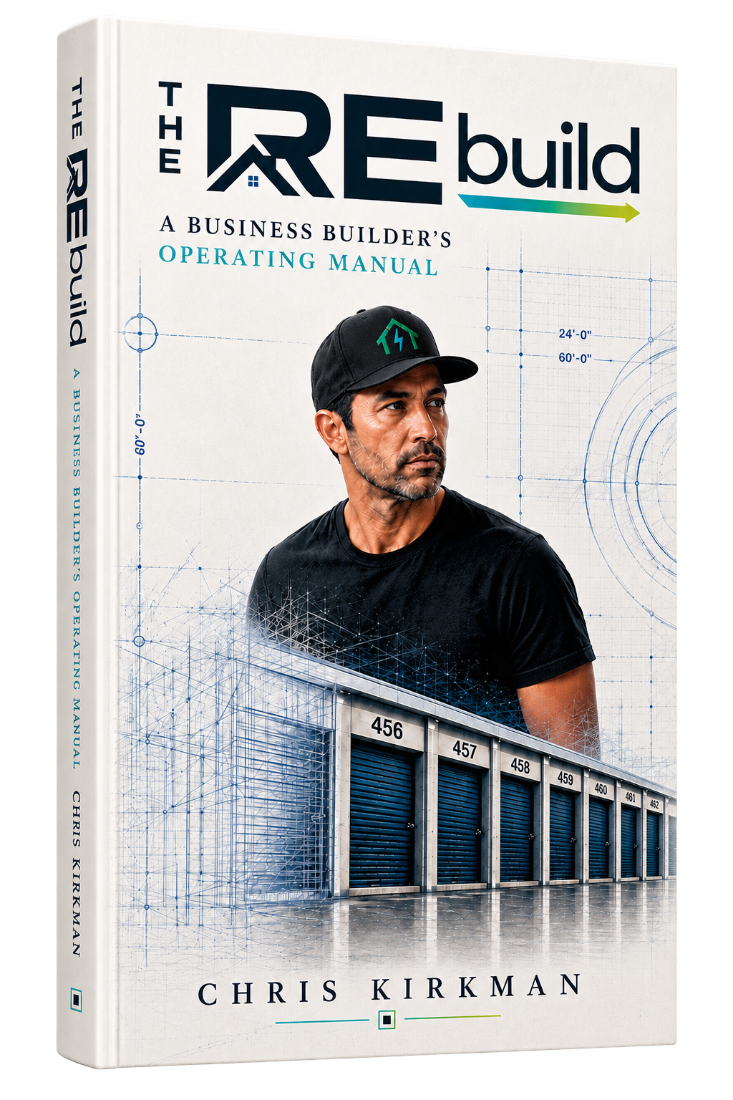
BRRRR with real numbers: my first one
My first BRRRR was a two-bed, one-bath with a basement, out of state in Portland because California cash flow is a bedtime story. We added a third bedroom and second bathroom downstairs, rented it for roughly a quarter more, and refinanced against the much higher appraisal. The cash-out returned most of what I had put into the down payment and rehab, tax free, ready for the next deal.

From The REbuild — see all 456 pages →
That is the whole method: buy, rehab, rent, refinance, repeat. The magic is not in any one letter; it is in the loop. Forced value, a bedroom and bathroom created from space the market was ignoring, is the part you control, and it is worth more than any market appreciation you hope for.
The candidates are findable on purpose: older homes with basements, second living rooms, oversized garages, any honest square footage the listing undersells. You are not looking for pretty; you are looking for convertible. A distressed property converts even harder, if you have the stomach and the crew.
Two cautions from the scars: appraisals are opinions, so underwrite the refinance at a boring number, not your hope; and leave real cash in reserve, because basements that gift you bedrooms can also gift you walls that need rebuilding. Mine did, years later. The deal still won.
You are not looking for pretty; you are looking for convertible.
The deal that taught me the whole play
Portland, Oregon. A two-bedroom, one-bathroom house with an unfinished basement. I added a third bedroom and a second bathroom downstairs, which raised the rent roughly twenty-five to thirty percent and, more importantly, raised the appraised value by far more than the renovation cost. The cash-out refinance returned my down payment and rehab money, tax-free, and I still owned the house.
That is BRRRR: buy, rehab, rent, refinance, repeat. The acronym was coined by Brandon Turner at BiggerPockets, and David Greene wrote the book on it. I did not invent the strategy; I just ran it until it worked, and then ran it on bigger things.
Why the basement is the whole trick
Appraisers pay for bedrooms and bathrooms. A basement that already has walls, a floor, and a ceiling can often gain both for a fraction of what an addition costs, because you are not touching the foundation or the roofline. Look for older homes with a basement or a second living room that can legally become a bedroom, and confirm egress and permitting before you buy, not after.
You are not buying a house. You are buying the distance between what it is and what it could legally be.
What I would warn you about
Two things nearly got me. First, the appraisal is an opinion, and a soft appraisal can trap your capital in the deal for a year. Have a plan for that outcome before you spend the rehab money. Second, a high-rate environment makes the refinance step brutal, because the DSCR test tightens exactly when you need it to be generous. In this cycle I underwrite the refinance at a rate higher than today’s and check that it still works.
Where it took me
That duplex was out of state on purpose, because good cash-flowing properties are hard to find in California. The same play later worked on apartments. The lesson is not the house, it is the pattern: force the value, prove it with a lease, pull your capital back, and do it again.
What I would do differently
I would have reserved more for the rehab, and I would have confirmed the bedroom egress and permitting before closing rather than during. Both cost me time, and time in a BRRRR is what turns a good deal into an average one, because your capital sits idle while the clock runs on carrying costs.
I would also model the refinance more conservatively. My first one worked in a friendly rate environment, and I mistook a market condition for a skill. Underwrite the exit refinance at a rate above today’s, verify the DSCR still clears, and know your hold-and-rent outcome if the refinance never comes at all.