The worry math: 99 fears, one arrival
Audit last year’s catastrophe list: the deal collapsing, the lender calling, the account at zero. Almost none of it happened, and the piece that did arrived smaller than the version you rehearsed. That is the worry math: ninety-nine percent of what we fear never shows up, and the one percent that does is survivable.

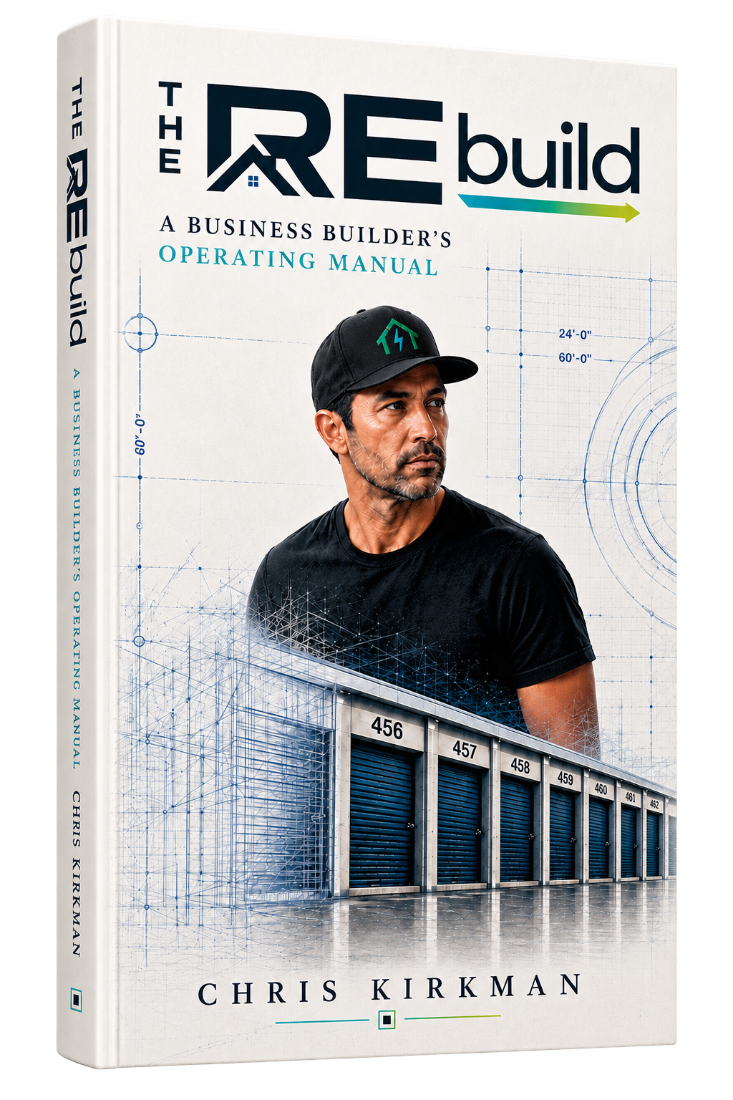
From The REbuild — see all 456 pages →
There is always a way out of the majority of problems. Some of the most successful people alive have filed for bankruptcy, some more than once, and rebuilt into empires because they refused to stay down. Credit wrecked? A small secured line, paid like clockwork, starts the climb back in months. Out of cash? Delivery apps, a stacked second job, a season of work you would not brag about. All of it beats paralysis.
Run the drill on paper: name the worst case in one sentence. Name the first move you would make the morning after. Notice you just survived it, on paper, in under a minute. The monster shrinks every time you measure it.
I have had low, low seasons, and the thing that finally got me moving was never the worrying. It was noticing that my ledger of survived catastrophes was undefeated. Yours is too. Always get up and rebuild. Always.
Name the worst case, name the first move after it, and notice you just survived it on paper.
The math nobody runs on their own fear
Write down what you are actually afraid of, then write the honest probability next to it, then write what you would do if it happened. That third column is the one that ends the spiral, because it turns a vague dread into a plan you could execute on a Tuesday.
I have done this on the worst nights of my business life: foreclosure notices on my own house, repossession letters, utilities shut off. Every single time, the third column existed. It was never pleasant, but it was never the end of the story either.
Why the odds column matters
Most of what we rehearse never lands the way we rehearse it. Not because the world is kind, but because catastrophic outcomes require a chain of failures and chains break. When you write the probability down honestly, most rows drop to something small, and the two or three that do not are exactly where your attention belonged all along.
Worry is a tax you pay on things that mostly never arrive.
The plan column, in detail
What this is not
This is not positive thinking. I am not asking you to believe nothing bad will happen; plenty has happened to me. I am asking you to replace an unbounded fear with a bounded one, because a bounded problem can be worked and an unbounded one just runs on a loop at two in the morning.
The point
Ninety-nine percent of what you carry never arrives. The one percent that does arrives at somebody who already wrote down what they would do, which is a completely different experience than being surprised by it.
The version I ran at the bottom
The worst stretch I have had, the three columns looked like this. Fear: I lose the house. Odds: honestly, not high, because I had payment history and a lender who would rather work with me than take it back. Plan: call the lender before they call me, get on a plan in writing, drive delivery at night if that is what covered the gap, and tell my people the truth early instead of hiding it.
I did all four. The house is still mine. And the thing I want you to notice is that the plan column was not clever. It was phone calls and unglamorous work. That is almost always what the third column contains, which is exactly why writing it down deflates the fear: the answer was never impressive, it was just uncomfortable, and uncomfortable is survivable.
Write your three columns while you are calm, because two in the morning is a terrible time to do arithmetic. Then when the bad night comes you are not solving the problem, you are reading a page you already wrote.